

December 2020 – Updates from the Chair
In the aftermath of 2020, opportunity in 2021.

2020 has been a most unusual year! From Covid-19 and its implications for our economy, to racial challenges, to a contested Election, nothing has gone as might have been expected. Despite these threats, democracy is alive if not somewhat bruised.
The Electoral College and the “winner take all” bills that were passed by the states in the mid – 1800s have caught the attention of politicians and the media. Most people were asleep in the high school when the lectures on Electoral College were given. The result? Few people understand how it works. Nevertheless, many voters have a niggling sense that something is wrong with it. America is the ONLY major democracy that does not elect its president by popular vote. No country would ever establish this system today.
The National Popular Vote Interstate Compact addresses many of the Electoral Colleges’ problems. With 15 states plus the District of Columbia having 196 or 72% of the electoral votes required for activation of the national popular vote, only another 74 are required. Florida with its 29 Electoral Votes would get us almost 40% of the way there. But it will take a lot of communicating and work to educate Legislators on why passing NPV would be in Florida’s best interest long term. Floridians for National Popular Vote is committed to getting NPVIC bills passed in Florida and across the nation by 2024.

Join us in 2021 to get NPV better understood and on everyone’s radar. First, make sure you have visited our website and filled out the Volunteer Form. This will connect you with like-minded individuals in your area or neighborhood who will be doing things like:
Sending supporting emails/postcards to your local legislators
Writing letters to news outlets
Speaking before community/church/social groups
Connect with NPV leadership in your area (see below) and make a difference in our pursuit of a better democracy. Our website is: Floridiansfornpv.com
 National News
 National News
Colorado’s NPVIC Affirmed by the Voters!

In the recent election, Colorado voters confirmed that they want their state to be part of the movement to correct some of problems with the Electoral College. Post election polls show the voters chose to keep their state in the National Popular Vote Compact by a margin of 52% to 48%. Including Colorado, the compact has been signed by states that collectively represent 196 Electoral College votes, 74 shy of the 270 needed to win the presidency.
A local grassroots group, “Yes on National Popular Vote” spearheaded the effort to sustain the bill and raised over $4.5 million dollars with the support of the League of Women Voters and Common Cause. Those against the bill were primarily those from rural areas and the Colorado Republican Party.
Congratulations to Sylvia Bernstein and “Yes on National Popular Vote!
https://www.yesonnationalpopularvote.com
Rep Geller filed NPVIC for Florida 2021 Session: HB 39
Sen Torres and Rep Geller spoke at Florida NPV Summit.
Over 60 Floridians gathered on a virtual conference call to plan its legislative strategy for 2021. Keynote speakers were Senator Victor Torres SD 15 and Representative Joseph Geller HD 100. During his presentation, Representative Geller announced that he had just submitted the NPVIC bill HB 39; and Senator Torres pledged to submit the same bill in the Senate before the end of the year.
Torres and Geller focused their comments on how important it is for the Legislators to understand how the NPVIC bill works so they can, in turn, educate their colleagues. Each stressed that constituents need to reach out to them in their district offices (before the craziness of the Legislative session) to demonstrate real concern about the “winner take all” rules and support for the solutions that NPV provides.

Senator Victor Torres SD 15

Representative Joseph Geller HD 100
 Eileen Reavey, Grassroots Coordinator for National Popular Vote, Inc. also spoke and shared strategies and tactics that had worked in other states. She reported that in Colorado, they made thousands of phone calls to voters who were registered as “Independents” – a strategy they believe helped their efforts.
Floridians is now poised to begin a campaign of contacting our Florida Legislators. We are awaiting two important events:
Senator Torres filing the NPVIC bill in the Senate (before 2021 I was advised)
The House of Representatives assigning members to its committees.
Once these efforts are completed, each of the Regions and Districts will work together to contact the Legislators on the key House and Senate Committees. The purpose is to educate them/their staff about NPVIC and urge their committee to “hear” the bill in their committees.
NPV Educational Programs
 NPV Educational Programs
NPV Programs
Below are the available NPV Videos. Just click on “Watch here” to view.
| Interview with MSNBC Political Analyst Rick Tyler & former Michigan Republican Party Chairman Saul Anuzis: The Conservative Case for a National Popular Vote Watch here |
| Interview with Former Lt. Gov Michael Steele (R-MD) on his Support of Electing the President by National Popular Vote Watch here |
| Interview with New York Times editorial board member Jesse Wegman on his recent book Let the People Pick the President Watch here |
Debating the Electoral College at The Cooper Union Watch here
Neal Peirce, author of The People’s President, and Dr. John Koza, Chair of National Popular Vote, debated the Electoral College with Tara Ross, author of Enlightened Democracy: The Case for the Electoral College, and Trent England, Director of Save Our States.MSNBC’s Lawrence O’Donnell moderated this discussion on whether the electoral college is an essential element of our democracy or an obstacle to it.
NPV Webinars
 NPV Webinars
Introduction to National Popular Vote – Webinar
December 22 7:00 PM ET / 4:00 PM PT Sign up here
Run time: 45 – 60 minutes
Watch a previously recorded webinar
Learn how we currently elect the President and about our plan to elect the President by National Popular Vote. Electing the President by National Popular Vote is the only reform that makes every vote for President equal and guarantees that whichever candidate receives the most votes becomes the President. Join staff from National Popular Vote to learn how this legislation works, how close it is to reality, and how you can get involved.
270 by 2024 Virtual Conference
National Popular Vote, FairVote, Common Cause, League of Women Voters, and Equal Citizens co-hosted this summit on National Popular Vote, discussing how we can change the way America elects the President by 2024. You can watch a recording here.
Interview with Professor George Edwards III, a presidential scholar and author of the book Why the Electoral College is Bad for America, Watch here
Interview with Former Lt. Gov Michael Steele (R-MD) on his Support of Electing the President by National Popular Vote, Watch here
Interview with New York Times editorial board member Jesse Wegman on his recent book Let the People Pick the President, Watch here
Perspectives on the Electoral College: Is 2020 a Turning Point?
Watch here
This year like all other election years on November 3, 2020, Americans will select their President through the electoral college. With a recent Supreme Court case clarifying states ability to control electors and states representing more than 70 percent of the threshold having enacted legislation to join a National Popular Vote Compact, the status and importance of the electoral college is very much up for debate.
Will the aftermath of the 2020 election change these dynamics? Does the current electoral college system advantage one political party over the other? Is the electoral college a bulwark against fraud or not? Our panelists will weigh in on the likely impacts of the court case, the coming election and other dynamics in helping elucidate what the future holds for the electoral college.
Panelists: Tara Ross, author “Why We Need the Electoral College”, Trent England, Save Our States Project, Pat Rosenstiel, Senior Consultant, National Popular Vote, Eileen Reavey, National Grassroots Director, National Popular Vote, Eli Lehrer, President, R Street, Moderator
NPV Groups
Look for your area and then click on the name along-side to be connected to the NPV District Chair in your area.
County | Name of NPV District Chair
Alachua – Anne Coppenhaver Interim
Bay – Kara Woodson
Broward – Mary Jo Mosca
Citrus – Kate Betsko
Collier – Suzanne Low
Dade – Kristofer Hernandez
Gainesville – Shirley Arcuri
Jacksonville – Pam Edwards-Roine
Lee – Jan Lonsdale
Lower Keys – Marge Holtz
Manatee – Alice Newlon
Martin – Laurie Aguera-Arcas
County | Name of NPV District Chair
North Pinellas – Ellen Siegman
Okaloosa/Walton – Katherine Rudolph
Orange – Louise Thompson
Palm Beach – Cynthia Archbold
Pasco – Christine Bright
Pensacola – Anne Coppenhaver Interim
Sarasota – Vilia Johnson
Space Coast – Sharon Reynold-Mixon
St. Petersburg – Marty Shaprio
Tallahassee – Anne Coppenhaver Interim
The Villages – Helen Kelly
Upper Keys/Monroe – Linda Kaplan
We are looking for NPV Chairs for Pensacola, Gainesville, and Tallahassee. If you are interested or know of someone who is, please contact Anne Coppenhaver at ccopenhaver@me.com. We are also thrilled to have new NPV District Committees sprouting up in Florida. If your area is not listed, contact Anne Coppenhaver who will welcome you and help set you up.
 Myth #7
 Myth #7
A major reason for establishing the Electoral College was to prevent elections from becoming contests where presidential candidates would simply campaign in big cities.
QUICK ANSWER:
Given the historical fact that 95% of the U.S. population in 1790 lived in places with fewer than 2,500 people, it is unlikely that the Founding
Happenings
 Happenings
NPV District Chair Monthly Meetings (Zoom)
First Thursday of Every Month from 5:30 – 6:30 PM EST
Next dates:
- January 7, 2021
- February 4, 2021
Contact Marcia Herman at marciavotes@gmail.com for an invitation to these meetings.

Volunteers Needed
- A writer to profile volunteers
For more information, please contact Kathleen Crampton.

Donations
We humbly accept your donations to help us do the good work of passing NPV in Florida.
Thank you. Donate here.
NPV Opens “On-Line Store”


October 2020 – Updates from the Chair
NPV a Priority Regardless of Election Outcome
Polls show that Biden is leading Trump by between 3% and 10% nationwide as of the last week in October. But there is no agreement on how each of the candidates will do in the Electoral College. Because most states have passed “winner take all” rules, election results now depend on small slivers of the voting population in swing or battleground states. This is what happened in 2016 when Trump lost the popular vote by 2.8 million votes but won the Electoral College because of the “winner take all” rules in Pennsylvania, Michigan, and Wisconsin by a mere 78,000 vote margin. This may happen again this year as well but would not if NPV were in effect.

With 15 states and DC having passed NPVIC bills for a total of 196 Electoral Votes, we need only another 76 votes to activate NPV. Regardless of the election outcome next week, our democracy should never again be beholden to small sliver of the population. This is why your Floridians for National Popular Vote is committed to getting NPVIC bills passed in Florida and across the nation.
League of Women Voters Makes NPV a priority for 2021
The LWVUS has long supported electing the president by popular vote. In 1970, the League supported an amendment to the Constitution that passed in the House but failed because of a Senate filibuster. In 2010, the LWVUS conducted a “concurrence” and expressed their support of the National Popular Vote as one acceptable way to achieve the goal of the direct popular vote of the President.
This past September, the LWVUS updated their 2021 Legislative Guidance and included the following regarding National Popular Vote (NPV):
Establish popular election: Support the popular election of the President through a compact among the states governing how they would cast their votes in the Electoral College.
Utilize the National Popular Vote Compact: Support the use of the National Popular Vote Compact as one acceptable way to achieve the goal of the direct popular vote for election of the president until the abolition of the Electoral College is accomplished.
Replace winner take all laws: Respect the right of state legislatures to replace winner take all laws.


98% of the general-election campaign events (119 of 122) by the major-party presidential and vice-presidential candidates during the first nine weeks (August 28 to October 22, 2020) of the 2020 campaign has been in just 12 closely divided battleground states. 80% of the events were in just 7 states — Florida, Pennsylvania, Michigan, North Carolina, Wisconsin, Nevada, and Arizona. All of the 122 events were in just 15 states. Thirty-five states and the District of Columbia have not received any general-election campaign events at all.
This has long-term implications since “swing” states receive more grants and greater federal largess. California has received little help for its devastating fires nor has Texas for its horrific hurricanes this past year. Both are reliably blue and red states respectively and therefore receive little federal attention. Having a President who is elected by a minority of voters is not good for the country long term.
FOR MORE INFORMATION, CLICK HERE
NPV Programs
Below are the available NPV Videos. Just click on “Watch here” to view.
Interview with MSNBC Political Analyst Rick Tyler & former Michigan Republican Party Chairman Saul Anuzis: The Conservative Case for a National Popular Vote Watch here
Interview with Former Lt. Gov Michael Steele (R-MD) on his Support of Electing the President by National Popular Vote
Watch here
Interview with Former Lt. Gov Michael Steele (R-MD) on his Support of Electing the President by National Popular Vote
Interview with Professor George Edwards III, presidential scholar and author of the book Why the Electoral College is Bad for America
Interview with New York Times editorial board member Jesse Wegman on his recent book Let the People Pick the President
Debating the Electoral College at The Cooper Union
Watch here
Neal Peirce, author of The People’s President, and Dr. John Koza, Chair of National Popular Vote, debated the Electoral College with Tara Ross, author of Enlightened Democracy: The Case for the Electoral College, and Trent England, Director of Save Our States.MSNBC’s Lawrence O’Donnell moderated this discussion on whether the electoral college is an essential element of our democracy or an obstacle to it.
Note: NPV only works within the Electoral College system; hence we support its improvement not its elimination at the present time.
How to Give National Popular Vote 101 Presentation
Tuesday, October 27, 3:00 PM EDT, Sign up here
A walk through on how to use the National Popular Vote slideshow template and give presentations in your own community. For volunteers.
Introduction to National Popular Vote – Webinar
November 4th 7:00 PM ET / 4:00 PM PT Sign up here
November 5th 12:00 PM ET / 9:00 AM PT Sign up here
November 6th 3:00 PM ET / 12:00 PM PT Sign up here
November 9th 8:00 PM ET / 5:00 PM PT Sign up here
Learn how we currently elect the President and about our plan to elect the President by National Popular Vote. Electing the President by National Popular Vote is the only reform that makes every vote for President equal and guarantees that whichever candidate receives the most votes becomes the President. Join staff from National Popular Vote to learn how this legislation works, how close it is to reality, and how you can get involved.
Debunking the Most Common Myths
About a National Popular Vote – Webinar
Friday, November 6th 4:30 PM ET / 1:30 PM PT Sign up here
Tuesday, November 10th 6:00 PM ET / 3:00 PM PT Sign up here
We’ll review the most common misconceptions that people have about electing the President by National Popular Vote with a focus on preparing attendees to respond to this opposition themselves. This is good for individuals who want to be better informed about the bill, and/or be better able to respond to these misconceptions on their own. Recommended: Have some preliminary understanding of National Popular Vote OR attend an Intro to NPV webinar first.
Advice to Speakers – Webinar
Wednesday, November 18th 3:00 PM ET / 12:00 PM PT Sign up here
A presentation on the do’s and don’ts of talking about National Popular Vote. Helpful for people who want to be as informed as possible when talking with their friends and family about National Popular Vote, and for people who might be presenting about National Popular Vote to a civic or community group. Recommended: Have some preliminary understanding of National Popular Vote OR attend an Intro to NPV webinar first.
How to Give National Popular Vote 101 Presentation – Webinar
Tuesday, October 27th 3:00 PM ET / 12:00 PM PT Sign up here
Thursday, November 19th 3:00 PM PT / 12:00 PM PT Sign up here
A walk through on how to use the National Popular Vote slideshow template and give presentations in your own community. For volunteers.

NPV District Chair Monthly Meetings (Zoom) First Thursday of Every Month from 5:30 – 6:30 PM EST
Next dates:
Thursday, Nov 5, 2020
January 7, 2021
Special Florida NPV Summit: Planning for 2021
Tuesday, December 8, 2020, 3:00 pm – 6:00 pm
Contact Marcia Herman at marciavotes@gmail.com for an invitation to these meetings.

Volunteers Needed
- Writer to profile volunteers
- Researcher to help with “In the News”
For more information, please contact Kathleen Crampton.

Donations
We humbly accept your donations to help us do the good work of passing NPV in Florida.
Thank you.

NPV Opens “On-Line Store”
Want to get our message out there? Hoping to stir up some interest in NPV?
Check out this link to see all the things ways you can help advertise National Popular Vote. The pictures below show a sample of what is available.

September 2020 – Updates from the Chair
Dear Florida NPV Friends:
With the Presidential election in full swing, John Koza, who first developed the concept of National Popular Vote, has started tracking the impact of the “Winner Take All” bills on the activities of this year’s two major candidates, Donald Trump and Joe Biden. Below you will find his very insightful article on what immediate impact of these bills, passed by states in the mid 1800’s, has on where today’s candidates are spending their time and resources in 2020. It suggests that, once again, a small percentage of the US voting population is likely to decide who our next President will be, essentially disenfranchising most voters. Read the Koza article, which we’ve included below.
Meanwhile, we continue our support of our colleagues at Coloradans for NPV who received a huge boost when The Denver Post recently endorsed “Yes on NPV – Ballot # 113”.
Finally, our Myth #5: The current system ensures that presidential candidates reach out to all states. This discussion allows you to compare the location of campaign events in 2020 with those in 2016. (With thanks to NPV,Inc. for response.)
Kathleen Crampton, Chair
Floridians for National Popular Vote
Only a Few States Will Decide the Presidency
by John Koza, Chair, National Popular Vote
The map shows where the presidential candidates campaigned in the first week since the conventions.

The reason why voters in only a small handful of states matter is that almost all states award all of their electoral votes to the candidate who gets the most votes inside the state. Thus, candidates have no reason to pay attention to voters unless they live in a state where the race is within a few percentage points.
Based on TV time bought by the candidates, the presidential campaign will expand, in the next few weeks, to a total of about a dozen states (adding Florida, North Carolina, Arizona, Ohio, and maybe one or two others). About three-quarters of the states will be totally ignored.
“The nation as a whole is not going to elect the next President. Twelve states are,” as former governor Scott Walker bluntly said in 2015 while he was running for President.
If you agree that every voter in every state should matter in every presidential election, please send an email to your state legislators and ask them to support the National Popular Vote bill.
Write Your Legislators
Write Your Newspaper
Volunteer
Donate
BACKGROUND INFORMATION
The National Popular Vote bill will guarantee the Presidency to the candidate who receives the most popular votes in all 50 states and the District of Columbia.
The shortcomings of the current system stem from state “winner-take-all” laws that award all of a state’s electoral votes to the candidate receiving the most popular votes in each state.
These state winner-take-all laws have enabled 5 of our 45 Presidents (including two of the last three) to come into office without winning the most popular votes nationwide.
Trump became President in 2016 even though he lost the national popular vote by 2.8 million votes. Trump won in the Electoral College (and hence the White House) because he carried Michigan by a bare 11,000 votes, Wisconsin by 23,000, and Pennsylvania by 44,000. These 78,000 votes in these three states were 36 times more important than the 2.8 million votes from the rest of the country that they canceled out.

Because of current state winner-take-all laws, presidential candidates regularly ignore three-quarters of the states in the general-election campaign. Candidates ignore states where they are safely ahead or hopelessly behind.
In 2016, virtually all (94%) the general-election campaign events (and virtually all campaign expenditures) were in the 12 closely divided states where Trump’s support was between 43% and 51%. Thirty-eight states were virtually ignored, including 12 of the 13 smallest states and almost all rural, agricultural, Southern, Western, and Northeastern states.
Voter participation is depressed in states that are ignored in presidential elections. Voter turnout was 11% higher in 2016 in the dozen closely divided battleground states.
The U.S. Constitution (Article II) gives states exclusive control over awarding their electoral votes: “Each State shall appoint, in such Manner as the Legislature thereof may direct, a Number of Electors….”
The winner-take-all method of awarding electoral votes is not in the U.S. Constitution, was not debated at the 1787 Constitutional Convention, and was not mentioned in the Federalist Papers. It is purely state law, and state laws may be changed the same way as they were originally enacted (namely by action of the state legislature).
The National Popular Vote compact will take effect when enacted by states with a majority of the electoral votes (270 of 538). After the compact comes into effect, all the popular votes for each candidate from all 50 states and DC will be added together. All of the electoral votes from all of the enacting states will be awarded to the candidate getting the most popular votes in all 50 states and DC. The presidential candidate supported by the most voters in all 50 states and DC will thereby win a majority of the electoral votes in the Electoral College (at least 270), and thus become President.
The compact has been enacted by 15 states and the District of Columbia (together possessing 196 electoral votes), including 4 small states (DE, HI, RI, VT), 8 medium-sized states (CO, CT, MD, MA, NJ, NM, OR, WA), and 3 big states (CA, IL, NY).
The compact will take effect when enacted by states with 74 more electoral votes (for a total of 270). The compact has already passed at least one legislative chamber in 9 additional states possessing 88 electoral votes (AR, AZ, ME, MI, MN, NC, NV, OK, VA).
The National Popular Vote bill will ensure that every vote, in every state, will matter in every presidential election.
Learn more at National Popular Vote.
COLORADO and “YES on NPV Ballot #113”
Proposition 113 is on the ballot in Colorado this November. A YES vote on Prop 113 supports the National Popular Vote, which guarantees the Presidency to the candidate who wins the most votes in all 50 states. Last year, Governor Polis signed the National Popular Vote into law. On November 3rd, Coloradans will be asked to approve the decision of the Legislature and the Governor.
The Denver Post just endorsed the campaign to elect the president by National Popular Vote!
We urge voters to vote yes on Proposition 113, and help this nation get to a popularly elected president. Our votes for president – an increasingly powerful position — are being diluted or erased in a way that occurs for no other elected official in this nation. This is a matter of preserving the sanctity of our votes across the nation. We can no longer allow millions of voters to feel their vote for president is futile because they are in the minority in their state. Republicans in California and Democrats in Texas should have their votes count as much as the votes of their political counterparts.
This is HUGE – and exactly the kind of momentum needed to sustain National Popular Vote. It’s clear that the NPV movement to make every vote for president count is gaining traction with voters across Colorado. But current polls show Proposition 113 with a narrow lead, which could disappear if endorsements like this one are not shared with undecided voters.
Thanks so much for your support, Floridians for NPV.
Myth #5: The current system ensures that presidential candidates reach out to all states.
The shortcomings of the current system of electing the President stem from “winner-take-all” laws that were enacted in the mid-1800s by state legislatures in the 48 states then in existence. These laws award all of a state’s electoral votes to the candidate receiving the most popular votes in each state. Far from ensuring that presidential candidates reach out to all states, the current state-by-state winner-take-all method of electing the President resulted in four out of five states being ignored in the 2016 general-election campaign for President. Almost all campaign events (94%) were in the 12 states where Trump’s support was between 43% and 51%. Two-thirds of the events (273 of 399) were in just 6 states (OH, FL, VA, NC, PA, MI).
General Election Campaign events for Trump and Clinton in 2016
Because of these state winner-take-all statutes, presidential candidates have no reason to pay attention to the issues of concern to voters in states where the statewide outcome is a foregone conclusion with the result that governance issues are adversely affected.

“Battleground” states receive:
- 7% more federal grants than “spectator” states
- Twice as many presidential disaster declarations
- More Superfund enforcement exemptions
- More No Child Left Behind law exemptions
Five of our 45 Presidents have come into office without having won the most popular votes nationwide.
The 2000 and 2016 elections are the most recent examples of elections in which a second-place candidate won the White House. Near-misses are also common under the current state-by-state winner-take-all method of awarding electoral votes. A shift of 59,393 votes in Ohio in 2004 would have elected John Kerry despite President Bush’s nationwide lead of over 3,000,000 votes.
The U.S. Constitution (Article II, Section 1) gives the states exclusive control over awarding their electoral votes: “Each State shall appoint, in such Manner as the Legislature thereof may direct, a Number of Electors….” The winner-take-all method of awarding electoral votes is state law. It is not in the U.S. Constitution. The winner-take-all rule was used by only three states in 1789, and all three repealed it by 1800. It was not until the 11th presidential election (1828) that even half the states used winner-take-all laws.

August 2020 – Updates from the Chair
Although much has been happening with Covid-19, the economic downturn, high employment, and protests related to racial injustices, Floridian for National Popular Vote has been preparing for the Legislative 2021 session. While some members took time to work on the upcoming election, spend time with family, or travel for vacations, a great deal had been happening behind the scenes. This month’s Update summarizes some of these efforts.
On the national level, NPV is focusing on Colorado and its “Yes on NPV – Ballot # 113. Given that almost all politics is virtual, Floridians can support this very important referendum by volunteering and working remotely. To support Colorado and all states working to make national popular vote a reality, NPV, Inc. has expanded its webinar offerings. And best of all, NPV has opened its new “online store” with lots of NPV logo merchandise. Read further in this newsletter for links to all three of these.
This summer your Floridians for NPV has been working hard to prepare for the 2021 Legislative session which is scheduled to begin Tuesday, March 2, 2021, and runs through Thursday, April 30, 2021. To that end we have welcomed several new people to our leadership team, have installed new contact software (Zoho), and are planning two organizational meetings to assure we have an integrated plan for contacting Legislators and other key influencers. We also address one of the most common myths about NPV: won’t recounts be more frequent under NPV? See the Myth Buster below.
Kathleen Crampton, Chair
Floridians for National Popular Vote
COLORADO and “YES on NPV Ballot #113”
As many of you know, Colorado passed the NPVIC legislation last year. However, the law has been suspended pending a vote on a referendum or Ballot #113 on November 3, 2020. Colorado Senate and House passed the NPV bill which was in turn signed by Colorado Governor Jared Polis on March 15, 2019. Almost immediately, groups opposed to NPV collected over 125,000 certified signatures and filed a referendum which placed it on the ballot for a statewide vote this November.
A “yes” vote supports Colorado joining the National Popular Vote Interstate Compact, which would give the state’s nine electoral votes to the presidential candidate who wins the national popular vote if states representing at least 270 Electoral College votes adopt the compact. Currently, Colorado’s nine electoral votes go to the presidential candidate receiving the most votes in Colorado. As of July, 2020, 15 states and Washington, D.C., (representing 196 Electoral College votes altogether) had adopted legislation to join the compact.
A “no” vote opposes making Colorado part of the National Popular Vote Interstate Compact (NPVIC). It is unclear if “no” passes whether it would “overturn” the previous bill passing NPV, or whether it would be merely a “recommendation” to the Colorado Legislature.
Coloradians for National Popular Vote has formed a coalition with other organizations and is raising funds to help educate the public on NPV. They have hired a campaign manager and have over 400 volunteers engaged. They are in the process of getting ordinary citizens and Legislators to provide “testimonials” on why they support NPV which will be used on their website, in ads, and on social media. Their newest effort is a “Texting Campaign” whereby respondents are engaged in a conversation regarding the benefits of NPV.
There are many opportunities to donate your time to the effort in Colorado. Please contact Sylvia Bernstein to help with texting and other initiatives. They need help now through election day! sylvia@yesonnationalpopularvote.com
NPV, Inc. EXPANDS SUPPORT TO STATES
Debunking the Most Common Myths About a National Popular Vote
Friday, August 28th
3:00 PM ET / 12:00 PT

We’ll review the most common misconceptions that people have about electing the President by National Popular Vote with a focus on preparing attendees to respond to this opposition themselves. This is good for individuals who want to be better informed about the bill, and/or be better able to respond to these misconceptions on their own.
Recommended: Have some preliminary understanding of National Popular Vote OR attend an Intro to NPV webinar first.
Advice to Speakers
Wednesday, September 23
3:00 PM ET / 12:00 PT

A presentation on the do’s and don’ts of talking about National Popular Vote. Helpful for people who want to be as informed as possible when talking with their friends and family about National Popular Vote, and for people who might be presenting about National Popular Vote to a civic or community group.
Recommended: Have some preliminary understanding of National Popular Vote OR attend an Intro to NPV webinar first.
Register Here to Join the Online Discussion
RECORDINGS OF EARLIER EVENTS
Interview with Professor George Edwards III, presidential scholar and author of the book Why the Electoral College is Bad for America

Interview with Former Lt. Gov Michael Steele (R-MD) on his Support of Electing the President by National Popular Vote
Interview with New York Times editorial board member Jesse Wegman on his recent book Let the People Pick the President

Debating the Electoral College at The Cooper Union
Neal Peirce, author of The People’s President, and Dr. John Koza, Chair of National Popular Vote, debated the Electoral College with Tara Ross, author of Enlightened Democracy: The Case for the Electoral College, and Trent England, Director of Save Our States.
MSNBC’s Lawrence O’Donnell moderated this discussion on whether the electoral college is an essential element of our democracy or an obstacle to it.

Perspectives on the Electoral College: Is 2020 a Turning Point
No matter how the popular vote for President comes out on November 3, 2020, Americans will select their President through the electoral college. With a recent Supreme Court case clarifying states ability to control electors and states representing more than 70 percent of the threshold having enacted legislation to join a National Popular Vote Compact, the status and importance of the electoral college is very much up for debate.
Will the aftermath of the 2020 election change these dynamics? Does the current electoral college system advantage one political party over the other? Is the electoral college a bulwark against fraud or not? Our panelists will weigh in on the likely impacts of the court case, the coming election and other dynamics in helping elucidate what the future holds for the electoral college.
Panelists: Tara Ross, author “Why We Need the Electoral College”, Trent England, Save Our States Project, Pat Rosenstiel, Senior Consultant, National Popular Vote, Eileen Reavey, National Grassroots Director, National Popular Vote, Eli Lehrer, President, R Street, Moderator
NPV Opens “On-Line Store”
Want to get our message out there? Hoping to stir up some interest in NPV? Check out this link to see all the things ways you can help advertise National Popular Vote. The pictures below show a sample of what is available.

FLORIDIANS FOR NPV PLAN FOR THE 2021 LEGISLATIVE SESSION
Expansion of the Floridians for NPV Steering Committee
Floridians for National Popular Vote is pleased that three Local Leaders have assumed more responsibilities and will be joining the Steering Committee. Anne Coppenhaver who has been the NPV Local Leader for Orange County is now the “Liaison” with Local Leaders; Pam Edwards-Roine is the new editor of the “NPV in the News”, and Cynthia Archbold will become Communications Coordinator. As we focus on the 2021 Legislative session, expanding our leadership team becomes essential if we are to be successful in providing the NPV educational messages. Please contact me if you would like to become more involved at krcrampton@gmail.com.
New Contact Software: Zoho
A key element of our communication program will be the ability to record and track interactions with Legislative leaders and staff. To facilitate that effort for the coming 2021 Legislative session, Floridians for NPV has installed and adapted Zoho CRM software which is now available to all the NPV Local Leaders. As Floridians for NPV volunteers connect with the Legislators on the 3 House and Senate Committees to which the NPVIC bills are assigned, they will record their interactions to facilitate and schedule subsequent follow up.
Floridians for NPV Organizational Meetings (virtual) planned for November and December
Once the 2020 Election are known, Floridians for NPV intends to hold virtual organizational meetings in early December. We want to review the results of the 2020 Election and implications for our overall strategy for the coming 2021 Legislative Session. Additionally, we will focus on the assignment of Legislators to key committees and detailed planning for contacting them and their staff in their district and Tallahassee offices during next January/February. More information will be forthcoming on the detailed plans for these events in future NPV Updates so stay tuned.
Myth #4: The current system typically produces undisputed outcomes, whereas recounts would be frequent under a national popular vote.
(Response adapted from NPV Website: www.nationalpopularvote.com)
Recounts would be far less likely under the National Popular Vote bill than under the current system because there would be a single large national pool of votes instead of 51 separate pools. Given the 1-in-185 chance of a recount and given that there is a presidential election every four years, one would expect a recount about once in 740 years under a National Popular Vote system. In fact, the probability of a close national election would be even less than 1-in-185 because the 1-in-185 statistic is based on statewide recounts, and recounts become less likely with larger pools of votes. Thus, the probability of a national recount would be even less than 1-in-185 (and even less frequent than once in 740 years).
Many people do not realize how rare recounts are in actual practice, how few votes are changed by recounts, and how few recounts ever change the outcome of an election.
April 2020 – Updates from the Chair
First and foremost, I hope that you all are well, healthy, and staying at home. But that doesn’t mean that there isn’t a lot that can be done right now to get ready for the coming fall and winter. As you will read below, given the challenges of COVID-19, a great deal more has been happening than we might have expected.
This month’s NPV Update focuses on:
*What is happening nationally
*Two recently published books about NPV
*Webinars on NPV being offered by NPV, Inc.
*A profile of Suzanne Low, NPV Local Chair for Collier County
*NPV Palm Beach welcomes new NPV members
*NPV Myth #2
Kathleen Crampton, Chair
Floridians for National Popular Vote
Status of NPV in Virginia
Virginia: The Chair of the Virginia Senate Committee has promised that NPV bill HB 177, which was deferred this past session, would reappear on the Committee’s docket during the “lame duck” session this November or December. Floridians for NPV will again be asked to staff phone banks and make calls to registered Virginia voters asking them to contact their Senators encouraging them to support the passage of NPV.
Status of NPV in Colorado
The “Yes on National Popular Vote” group in Colorado is moving ahead in preparation for the election in November. Although Colorado passed an NPV bill last spring, a group of conservatives, hoping to overturn that decision, gathered and filed enough signatures to get the issue on the 2020 ballot. The question on the ballot will ask voters if they want to elect the President by Popular Vote or not. In preparation, NPV Colorado in conjunction with the LWV and other organizations is holding “virtual” press conferences and webinars to educate local leaders and influencers so they can spread the word regarding the ballot question.
Educating the public is not easy. Many citizens know little about the Electoral College or what the “winner take all” rule means. To help underwrite the expenses of these virtual conferences, “Yes on Popular Vote” is raising funds. If you can help them, even with a small donation, please follow this link, www.yesonnationalpopularvote.com.
Join Webinars with Jesse Wegman and Michael Steele
National Popular Vote, Inc. has arranged for webinars with these two very knowledgeable and engaging speakers.
Jesse Wegman Webinar:
Thursday, April 23 at 3 PM EDT

Jesse Wegman is a member of the Editorial Board of the New York Times and has been studying the problems inherent in the Electoral College for many years.
His recently published book, Let the People Pick the President, is reviewed below.
Wegman has long been a critic of the Electoral College and has written several New York Times editorials that have supported National Popular Vote.
Michael Steele Webinar:
Friday, May 1 at 2 PM EDT
Even though Michael Steele was the President of the National Republican Party, he has long been a supporter of NPV and has begun to work with NPV as a national spokesperson. He believes that having the President elected by popular vote is good for democracy and not just good for one party or the other. Most recently Mr. Steele published an article in The Hill which documents how swing states get more attention from Presidential Candidates (article link below).
An engaging speaker, Mr. Steele will present the rationale for NPV and then will take questions from the audience.
Click here to connect to Steele article: Would a National Popular Vote remove some politics from presidential decision making?
Two New Books on NPV and the Electoral College Just Published:
Let the People Pick the President by Jesse Wegman, who is a member of the New York Times Editorial Board. His “…. urgent and ultimately irrefutable call to action is the most readable and fully informed explanation of how the Electoral College is wrecking America’s great experiment in government of, by, and for the people. It’s not too late to rescue our democracy from destruction. Wegman makes a compelling case that we must act now – and explains what to do.” Laurence Tribe, Professor, Harvard Law School.
Presidential Elections and Majority Rule by Edward Foley is a, “powerful, original account of the purpose of the Electoral College and will be the most important guide to anyone trying to understand and preserve whatever genius there was in this odd institution. It offers critical and urgent advice to anyone trying to reform it now.” Lawrence Lessig, Professor, Harvard Law School.
Profile of Suzanne Low, NPV Collier County Local Leader

“It grabbed hold of my attention,” explains Suzanne Low when asked how she became involved in the National Popular Vote movement. Retired from a distinguished career as a lawyer, financial planner, and teacher, Suzanne joined the board of the Collier County League of Women Voters and was an active member of the League’s Government Committee. Through this service, she learned about the National Popular Vote, and volunteered to lead the National Popular Vote effort in Collier County.
Suzanne’s parents fled from Europe to America to escape Nazi persecution. Consequently, Suzanne regards voting not just as a right or a privilege, but an obligation. “It’s not fair that so many voters in America feel their votes for President don’t count. It’s the one position that is supposed to represent all of us. When I saw that the NPV law had passed 15 states, representing more than 72% of the votes needed to put it into effect, I knew that it was not just pie in the sky, it’s a pragmatic method to reform an archaic system of choosing our President,” she says. She feels she has been able to apply her legal, teaching and public speaking experiences to help others understand the somewhat complex but logical ideas behind NPV.
She stresses that the NPV is not just for liberals. Many prominent conservatives have also joined the movement. The NPV is fair and inherently non-partisan. “Why should my vote be different depending on where I live?” she asks. An inveterate problem solver, Suzanne has assembled and trained a local group that is part of the statewide effort to encourage the Florida Legislature to adopt the National Popular Vote by 2024.
Suzanne joined the firm Lassus Wherley in 1997 as a Certified Financial Planner and served as the firm’s Director of Florida Operations, retiring in 2016. She earned a Bachelor of Arts degree, with distinction, from the University of Wisconsin in 1970, a Master’s Degree from Indiana University in 1973, and her law degree from Rutgers University School of Law in 1981. She chaired the New Jersey Supreme Court District X Ethics Committee, later serving as Special Master of the Committee. She also sat on the New Jersey Supreme Court Ethics Financial Committee.
Anyone interested in more information, or to join the Collier League’s NPV team can contact Suzanne at suzannelow12@gmail.com.
NPV Palm Beach Workshop
On March 7, 2020, the LWV of Palm Beach County held a workshop for new members on the facts about the National Popular Vote Interstate Compact and the Electoral College.

Attending were (left to right) Lee Alcott, Cynthia Archbold (NPV Issue chair), Ina Trueheart, Dina Meyer, John Boden, and Varisa Lall Dass.
NPV Myths
Because there seem to be a lot of myths about NPV, each edition of this NPV Update will include a section focusing on one of these many misconceptions. These explanations have been adapted from the National Popular Vote Website.
Myth #2: The small states would be disadvantaged by a national popular vote.
The small states (the 13 states with only three or four electoral votes) are the most disadvantaged and ignored group of states under the current state-by-state winner-take-all method of awarding electoral votes. The reason is that political power in presidential elections comes from being a closely divided battleground state, and all but one (New Hampshire) of the small states are noncompetitive states in presidential elections.
The small states are not ignored because of their low population, but because they are not closely divided battleground states. The 12 small non-battleground states have about the same population (12 million) as the closely divided battleground state of Ohio. The 12 small states have 40 electoral votes more than twice Ohio’s 18 electoral votes. However, Ohio received 73 of 253 post-convention campaign events in 2012, while the 12 small, non-battleground states received none.
The current state-by-state winner-take-all system shifts power from voters in the small and medium-sized states to voters in a handful of big states that happen to be closely divided battleground states in presidential elections.
The fact that the small states are disadvantaged by the current state-by-state winner-take-all system has long been recognized by prominent officials from those states. In 1966, Delaware led a group of 12 predominantly small states in suing New York (then a closely divided battleground state) in the U.S. Supreme Court in an effort to get state winner-take-all statutes declared unconstitutional.
Under the current state-by-state winner-take-all system, a vote for President in Wyoming is equal to a vote in California. Both are politically irrelevant.
| ||||||||||||||||||
|


March 2020 – Updates from the Chair
This month’s NPV Update focuses on several important events: NPV in Virginia, LWVFlorida joining Floridians for NPV’s Coalition, Conservatives for Yes on National Popular Vote, and upcoming NPV related events in Florida. A section on NPV Myths has been added along with a reminder about scheduling NPV Presentations.
Kathleen Crampton, Chair
Floridians for National Popular Vote
Status of NPV in Virginia
(Adapted from a report by Eileen Reavey, NPV, Inc. National Grassroots Director )

Virginia legislators filed National Popular Vote Interstate Compact HB 177 this session. The NPVIC bill made it through House committees and was passed on the floor of the House of Delegates. In the Virginia Senate, things moved differently. The Senate Privileges & Elections Committee voted 14-1 to carry over HB 177 until next session. The Chair of the committee, publicly said HB 177 would reappear on Committee’s docket when it meets again in November or December of 2020.
What does this mean?
HB 177 will go before the Senate committee at a November or December meeting yet to be scheduled. If it passes out of that committee at that meeting, the bill moves to the Senate to be voted on at the very beginning of the 2021 session and then goes to the Governor’s desk. A carry over means no need to pass it through the House again. If for any reason the Senate does not pass the bill out of committee at that meeting, a new National Popular Vote bill could be reintroduced in 2021 and we would need to pass it through both chambers again.
Is this a good thing? A bad thing?
This was the best outcome possible given the situation in the committee. Even though the Democratic votes were there, NPV didn’t quite have enough support to pass the NPVIC bill; it is better for it to be carried over to the next session as opposed to having a “no” vote on the record. More time is needed to meet with Democratic and Republican legislators to earn their understanding and support of the bill.
Next steps:
National Popular Vote will continue to lobby the Senate over next several months to earn their support for the bill by the time we get to November. At its November meeting, NPV supporters will push out calls-to-action to Virginia voters to support the passage of National Popular Vote. Expect educational forums with the LWV, ACLU, NAACP, training more Virginia volunteers to present the bill to groups locally, and working to get even more endorsements from local organizations.
Thank you!
League of Women Voters Florida’s Joins NPV Coalition
This past month, the League of Women Voters of Florida’s Board voted to join the Coalition of Floridians for National Popular Vote. Given that the LWVFL helped establish Floridians for National Popular Vote, this was not surprising. NPV has always had a close relationship with the League.
The NPV movement in Florida was spawned originally by the LWV of Palm Beach County which received funding to improve community understanding of the Electoral College and support efforts to elect the president by popular vote. Encouraged by then LWVFL President Pamela Goodman, LWVPBC president Karen Wilkerson, and PBC Voting Rights Chair Nancy Cohen, a small group of NPV supporters coalesced around speakers (Dean Vikram Amar, U. of Illinois Law School and Patrick Rosenstiel NPV) at the 2017 LWVFL Bi-Annual Convention. Building upon new found support, this stalwart group attended the LWVUS 2018 Convention and helped pass a Resolution which made NPV a part of “Making Democracy Work”
During the same time in Florida, this group worked with Representative Joseph Geller and Senator Victor Torres to submit NPVIC bills in Florida’s House and Senate. To facilitate the efforts to communicate with Legislators, the LWVFL encouraged the formation of a separate NVP organization. With LWVFL President, Patti Brigham’s, guidance and advice, an independent organization has been established. Floridians is thrilled that the LWVFL is now a member of the NPV Coalition, an organization they helped establish.
With the addition of the LWV Florida, there are now four coalition partners:

Represented by Liza McClenaghan, its Florida Chair, Common Cause has long been a supporter of National Popular Vote both nationally and at the state level. They have a page on their website that outlines their commitment to the issue and how their members can participate.
Represented by Eileen Reavey, Director of Grass Roots support for NPV, Inc., this organization was founded by John Koza who first conceived of NPV Compact in 2006 and has been supporting it for the past 14 years.
Represented by Michael Tarnoff, this Illinois based non-profit focuses on raising money for various groups involved in passing NPV bills in states that have not yet passed NPVIC bills.

In the future, Floridians will work closely with these organizations to make sure that all NPV related activities are coordinated at state and local levels. Educational efforts will be supported by all organizations with communications with Legislators being reserved for Floridians. Although NPVIC bills have been filed in Tallahassee, none of the committees to which they have been assigned have held hearings. One reason is that even those who are inclined to support NPV remain unsure of how it works. This makes it incumbent for all Coalition members to step up communication about NPV to local community leaders and candidates this fall. Legislators need to understand that NPV is about replacing “winner take all” rules which determine outcomes in the remaining 32 states.
Together, we intend to replace these laws with the National Popular Vote Interstate Compact bills by the 2024 Presidential election.
Conservatives for Yes on National Popular Vote
(Adapted from an article by Justine Coleman, The Hill, 2/26/20)
A new conservative campaign advocating for the national popular vote movement sought to promote their effort at the annual Conservative Political Action Conference (CPAC) this past week. Their purpose was to educate those on the right about the movement and challenge myths that NPV would largely benefit Democratic candidates.

Michael Steele former Republican National Committee Chairman commented that the Republican Party is increasingly at a disadvantage in the Electoral College as more states, like Texas, with 38 electors, could become more liberal. “NPV empowers citizens to know… that their votes will count in every election,” Steele said. “Lack of turnout from voters who think their vote doesn’t matter for president can have a devastating impact on down-ballot candidates of the party.” Steele predicted that the U.S. could shift to a national popular vote model as soon as 2024.
Surprisingly, Trump himself has previously entertained the idea of a national popular vote election, saying in a 2017 interview, “I would rather have the popular vote because it’s, to me, it’s much easier to win the popular vote.”
NPV Myths

Addressing common Myths about NPV will be a feature of this newsletter. Adapting information from the National Popular Vote website (see NationalPopularVote.com), we hope these answers are useful.
MYTH #1: A federal constitutional amendment is necessary for changing the current method of electing the President.
The U.S. Constitution gives the States the “exclusive”and “plenary” power to choose the method of awarding their electoral votes.
The shortcomings of the current system of electing the President stem from state “winner-take-all” statutes that award all of a state’s electoral votes to the candidate who receives the most popular votes within each separate state.
The state-by-state “winner-take-all” method of awarding electoral votes is not in the U.S. Constitution. It was not debated at the Constitutional Convention. It was not discussed in the Federalist Papers.
The “winner-take-all” rule was used by only three states in the nation’s first presidential election in 1789 (all of which abandoned it by 1800). The Founders were dead for decades before the “winner-take-all” rule became the predominant method of awarding electoral votes.
Maine and Nebraska currently award electoral votes by congressional district — a reminder that the method of awarding electoral votes is a state decision.
The “winner-take-all” rule is used today in 48 of the 50 states because it was enacted as a state statute in those states, under the same provision of the U.S. Constitution (empowering the states to choose the method of awarding their electoral votes) being used to enact the National Popular Vote plan.
“Winner-take-all” statutes may be repealed in the same way they were enacted — namely, through each state’s process for enacting and repealing state laws. Therefore, a federal constitutional amendment is not necessary to change the state-by-state winner-take-all method of awarding electoral votes.
The Constitution’s grant of exclusive power to the states to decide how presidential elections are conducted was not a historical accident or mistake, but was intended as a “check and balance” on a sitting President who, in conjunction with a compliant Congress, might manipulate election rules to perpetuate himself in office.
NPV Presentation to the Indivisibles
As shown below, Cynthia Archbold (standing in the back), among our most frequent speakers, made an NPV presentation on February 15th to the Invisibles of Palm Beach. As often happens, although this is a very politically savvy group, few of them had ever heard of NPV and were very excited about the change it could make in how we elect our President.
If you would like someone to speak at your event or organization, go to Floridians for NPV and complete a speaker request form. With more than 10 NPV presenters around the state, Floridians will be happy to arrange a speaker for you.

Upcoming Events in Florida
March 13-14: The LWVUS CEO Virginia Kase will be featured on the main stage at the People en Español women’s leadership conference, Poderosas Live!, on a panel celebrating the centennial of women’s voting rights called “When She Votes, The Future is Bright”.
March 20: At the University Club of Orlando, Kathleen Crampton will be speaking on National Popular Vote during their Monthly luncheon.
April 18 & 19: LWVFL Leadership Conference and Centennial Celebration featuring Carolyn Jefferson-Jenkins, former LWVUS President.
|
|
|
|
January 2020 – Updates from the Chair
This very important political year, Floridians for NPV will focus its activities within our state and with helping two other states which will be key for NPV. In Florida, we will work to get a “hearing” of the three NPVIC bills filed in our House and Senate. In Virginia, we will support efforts to get NPVIC bills passed during their upcoming legislative session this January – March; and in Colorado we will support their NPVIC ballot initiative in advance of the November election.
Kathleen Crampton, Chair
Floridians for National Popular Vote
Support of Florida HB 335 and SB 908
Contact House and Senate Leadership in the following Committees:
With HB 335 having been filed by Representative Joseph Geller, SB 908 filed by Senator Victor Torres and HR 323 by Representative Bob Rommel, we need to get these NPVIC bills “heard” in their respective committees.
House HB 335 and House HR 323 have been referred to:
Oversight, Transparency, and Public Management Subcommittee
State Affairs Committee
Civil Justice Subcommittee
Senate SB 908 has been referred to:
Ethics and Elections Committee
Judiciary Committee
Rules Committee
In opposition to NPVIC, Representative Bob Rommel from Collier County has filed Resolution 323. The Resolution suggests that if NPVIC bills were passed, states would not determine how their electoral votes would be cast. This is not the case; in accordance with the Constitution, states which pass NPVIC retain the right to direct their Electors how to vote.
Given that there appears to be some support from Republican Leadership, HR 323 may be debated in Committees which would give Rep Geller/Sen Torres the opportunity to present the facts about NPVIC and why Florida should pass it. Hence, we are asking our NPV local leaders and their committees to meet with their legislators during the session to give them CORRECT information about NPVIC bills.
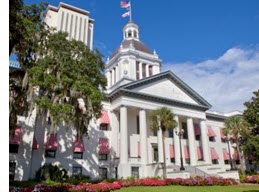
Postcards to Legislators
Under the leadership of Cynthia Archbold, the Palm Beach NPV Group, and NPV leaders across the state have been writing NPV postcards to legislators on the Key Committees. Their message is to encourage legislators to “hear” HB 335 and SB 908 in their Committees this 2020 legislative session. There are 3 Key House committees (see above) with approximately 15 members each; and 3 Key Senate Committees (see above) with approximately 10 members each. With the state-wide NPV postcard writing effort, key legislators receive as many as twenty postcards.

Teams work to send personalized notes to legislators encouraging them to “hear” HB 335 and SB 908 in their committees this 2020 Legislative Session.

Anne Kruse shows one of the postcards she sent to lawmakers

NPV Postcards ready to be mailed out to the legislators.
If you or your group are interested in participating in this activity, please contact Cynthia Archbold at carchbold@gmail.com
Virginia
Last November, Virginia’s House and Senate flipped from Republican to Democratic. Although the majorities are slim, there appears to be interest in passing NPVIC in both chambers. Hence with assurance of signing from the Governor, NPVIC bills have been filed for consideration this upcoming Legislative session. Grassroots support has grown as well as lobbying by NPV organizations to get the bills heard in committees and passed in the Legislature. When passed, Virginia would add 13 Electoral Votes for a total of 209 EV, only 61 EVs away from activating NPVIC and electing our president by popular vote.
To help educate voters in Virginia about NPV, phone banks are being established nationwide which will enable supporters from other states to participate. Look for details from us on how you can spend as few as 30 minutes calling folks in Virginia interested in learning more about NPV. Additionally, you can contribute to Virginia’s fundraising efforts by going to National Popular Vote Website and clicking on Virginia.
New Floridians for National Popular Vote Website
Our new website, Floridians for National Popular Vote has been launched. (FloridiansforNPV.com). As you cruise through the site, please note the following when you click on “Get Involved” and look under:
“Events” to find out next events
“Take Action” to become a volunteer or speaker.
“Volunteer” to have access to our NPV Tool kit.
“Local Committees” to find an NPV Committee near you.
Deb Mazzaferro, with assistance from Kim Lansing, helped produce the new website; we are grateful to them for their hard work and commitment to NPV.
Speakers for National Popular Vote
Does your organization need someone to speak at their monthly meeting this year? With the elections this fall, many organizations and their members are eager to understand the burgeoning political issues like National Popular Vote.
Floridians for NPV is happy to provide trained speakers for your or any organization who can give short and illuminating presentations on NPV. Our new Web Site has a Speakers Request Form. If you are interested in having someone speak at your or any organization, please fill out the form. Ingrid Johnson, our Speakers Coordinator, will contact you and make the appropriate arrangements.
League of Woman Voters US NPV Task Force Statement
After meeting for half a year, the LWVUS NPV Task Force was authorized by the LWVUS Board to issue the following statement. Sharon Reynolds Mixon and Kathleen Crampton, both from Florida, are members of the Task Force.
“The LWV National Popular Vote (NPV) Task Force has been authorized to act by the LWVUS board. The purpose of the Task Force is to investigate League momentum around the topic of NPV and to gain a deeper understanding of the work being done by state and local Leagues around the country related to the NPV plan.
The following educational tools are being developed by the NPV Task Force and will be shared with our members as they are completed and released:
An NPV-related PowerPoint Presentation
A dedicated NPV webpage on the LWV website
An NPV Informational Webinar
The opportunity for members to attend a comprehensive NPV Workshop at the LWV 2020 Convention
A full report about the progress of Task Force efforts will be presented to Leagues by late summer of 2020. Until then, Leagues should continue to defer to their state leadership for guidance and support on any work related to National Popular Vote.”
We are pleased that the LWVUS will be providing support services to those states which are interested in passing NPVIC.
Planning for 2020 – 2021
Your leadership team met for an all-day planning meeting on Wednesday, December 18th at the South Florida Science Center in West Palm Beach.

Attending in person, from left to right: Kim Lansing (Mailchimp, mailing lists), Marcia Herman (Speakers Bureau Coordinator when she returns from Wyoming), Leslie Feinberg (Partnerships, Organizational Supporters, Orange County Local Leader), Ingrid Johnson (Local Leaders’ Coordinator and Interim Speakers Bureau), Cynthia Archbold (Postcard Program, Public Relations, and Palm Beach NPV Local Leader), Kathleen Crampton (Chair)
Attending by Zoom: Deb Mazzaferro (Operations), Liza McClenaghan (Florida Common Cause), Eileen Reavey (National Popular Vote), Michael Tarnoff (Making Every Vote Matter)
We focused on reviewing our accomplishments for 2019, strategic planning to get NPVIC passed in Florida by the 2024 Election, and tactical plans for 2020.
We will discuss more on our next Local Leader Conference Call on Thursday, January 9th at 5:30-6:30.
Volunteer Opportunities
Public Relations Coordinator: Great opportunity for someone who likes to write and coordinate the communications activities of Floridians for NPV. Contact Kathleen Crampton at krcrampton@gmail.com.
Donations
We humbly accept your donations to help us do the good work of passing NPV in Florida.
Thank you.
December 2019 – Deck the Halls of Tallahassee Postcard Signing Party!
Many HUGE thank you to all in Palm Beach County who volunteered to write heartfelt NPV messages to Florida Statehouse Representatives serving on committees who will decide whether to hear legislation in January!
Thanks to Barry Trilling, Anne Kruse, Marsha Katz, Phyllis Malmuth, Carole Berger and her wonderful SEE members.
These postcard parties are happening across the state on behalf of Floridians for NPV!
Thanks to all on our core team for your help on the database and our list of representatives.
Let it snow, let it snow, let it snow—POSTCARDS! I hear their having a blizzard in Tallahassee!
Best to you all!!!!
Cynthia Archbold
Director, Floridians for National Popular Vote


Postcards on their way to the Post Office


October 2019 Update from the Chair
This month our focus is on the two Bills related to National Popular Vote Interstate Compact that have been filed for the 2020 Florida Session; on the NPV Webinar Training Program; the upcoming “Learning at Lunch” event for Legislators on November 12th in Tallahassee; and the launching of the new Floridians for NPV website.
Kathleen Crampton, Chair, Floridians for National Popular Vote
Representative Joseph Geller files NPVIC Bill for the 2020 Session
Representative Joseph Geller (north Miami-Dade, south Fort Lauderdale) filed HB 335, the National Popular Vote bill. Senator Victor Torres (south Orlando) will once again file a companion bill in the Senate shortly as he has for the past four years. Once bills are filed in both the House and Senate, they are referred to Committees. We expect that the Florida House HB 335 to be referred to the following committees: Local, Federal, and Veterans Affairs; Judiciary; and Public Integrity and Ethics Committee. The Florida Senate, will likely refer its bill to: Government Oversight and Accountability; and Ethics and Elections.

Meeting earlier this year to talk about NPV Educational Programs are from left, Ken Thomas, President of the LWVPBC, Karen Wilkerson, Former President of the LWVPBC, Kathleen Crampton, and Representative Joseph Geller.

Third and fourth from left, Carmen and Senator Victor Torres stand behind NPV sign with members of the Tallahassee NPV team.
In opposition to NPVIC, Representative Bob Rommel (Collier) has filed a House Resolution (HR 323). This Resolution, “reaffirms the oath of office made by each member of House of Representatives to support, protect, & defend U.S. Constitution, including 12th Amendment, & supports preservation of Electoral College”. The Resolution suggests that if NPVIC bills were passed states would not determine how their electoral votes would be cast. This is not the case. The states would retain the right to direct their Electors how to vote. This Resolution has already been referred to: Oversight, Transparency, and Public Management; State Affairs Committee; and Civil Justice. Given that there appears to be some support from Republicans, it may be debated on the floor which would give Rep Geller/Sen Torres the opportunity to address a large body of Legislators. Hence, we will ask our NPV committees to meet with their Legislators ahead of the session to give them CORRECT information.
NPV Webinar Training
On Thursday, October 3rd, over 25 joined our Webinar to learn more about National Popular Vote. State Senator Chris Pearson of Vermont was the speaker. He used the new NPV PowerPoint which is now available on the newly completed Floridians for NPV website (www.floridiansforNPV).
Senator Pearson has been a proponent of NPV for many years and helped pass it in his own state of Vermont. Since Vermont’s Legislature is part-time, Senator Pearson works for Jon Koza and the National Popular Vote, Inc. as a speaker and lobbyist.

In addition to giving the NPV presentation, he also answered a myriad of questions regarding how to get more Republicans to support NPV. He stressed that it is critical to get the correct facts out to folks. So much of what people believe about the Electoral College and how people vote is simply not true.
We were very grateful to National Popular Vote and to our coordinator, Eileen Reavey for arranging for Senator Pearson to be on our webinar. If you would like to know more about speakers for your group or to volunteer, go to Floridians for Popular Vote and sign up.
Dean Vikram Amar, PhD, University of Illinois School of Law, to speak to Florida Legislators
Representative Joseph Geller and Senator Victor Torres will be hosting a “Learning at Lunch” event for Legislators on Tuesday, November 12th in the statehouse. Dr. Amar is an expert on National Popular Vote, having written a number of academic articles on National Popular Vote. Many of you heard Dr Amar speak this past spring at the Hot Topics Luncheon sponsored by the LWV of Orange county. Over 180 people attended that “sold out” event and were most impressed by Dr. Amar’s ability to make complicated issues understandable.
Please contact your Legislator and encourage them to attend the event which will be held on Tuesday, November 12th from 12:00 noon to 1:30 in the Senate Office Building, room 221.

Taken earlier this year in Orlando, from left to right, Dr. Vikram Amar, Dr. Rick Fogelson, Rollins College, and Leslie Feinberg, NPV Coordinator for Orange County.
FL4NPV Coalition Announced
With the launching of FL4NPV, we have reached out to other organizations to establish partnerships. We are pleased to announce that three organizations have entered into partnership with Floridians for NPV. Common Cause Florida under the leadership of Liza McClenaghan, Chair of CCFL Governing Board, recently agreed to a partnership agreement. She has already become a key member of our Florida NPV “Core” Group. NPV, Inc. which was founded by John Koza has also agreed to be a partner with Floridians for NPV. Finally, a Chicago based group which supports NPV called Make Every Vote Count has also become a partner with Floridians for NPV.
We are delighted to have these organizations working with us and look forward to welcoming other organizations in the future.
Volunteer Opportunities:
Event Coordinator: Someone who likes to organize events and guide others to do the same. Need to be compulsive, detail-oriented, good with people.
Writer: background in public relations, writing, publishing; social media would be a plus.
If you are interested, please contact Kathleen Crampton at krcrampton@gmail.com.
|

September 2019 – Update from the Chair
Constitution Day events with focus on National Popular Vote were held in ten different venues in Florida. Each of these was sponsored by League of Women Voter NPV groups working with local colleges, universities or other organizations. While the audiences and formats for each of these varied, the focus was on the US Constitution, the Electoral College and National Popular Vote. In many cases, voter registration was also offered.
These events were conceived and implemented by leaders in each League. Their dedication and hard work cannot be underestimated. We are grateful for their time, energy, and commitment to making democracy work. The following scenes and brief summaries give you a sense of the diversion of activities at each of these ten Constitution Day events.
Patrick “Rosy” Rosensteil, a senior consultant with NPV, Inc based in Minnesota spoke on National Popular Vote at three of the Constitution Day events. His command of the NPV material and low keyed style caught the attention of even the most skeptical of audiences. We are most grateful to the John Koza and the NPV, Inc. which arranged for Rosy to speak at these events.
Kathleen Crampton, Chair, Floridians for National Popular Vote
Murray Nelson Government & Cultural Center, Key Largo
The Upper Keys LWV partnered with the Business and Professional Women to celebrate Constitution Day with their community. 75 people enjoyed the reception and educational materials focusing on the National Popular Vote. The first Keys all female BSA troop led the Pledge of Allegiance followed by a video message from Congresswoman Debbie Murcarsel-Powel supporting voting rights with passage of H.R. 1 – For the People Act – which supports expanding voter registration/access, making Election Day a federal holiday, and limiting the removal of people from voter rolls. Awards were presented to middle and high school students for the winning essays on “What are the essential qualities of a good citizen in the Keys.” Candice Hoke, a nationally renowned election cybersecurity consultant spoke on the issues facing Florida in its election processes. She encouraged the LWV to focus on Election Cybersecurity with as much commitment as eliminating gerrymandering. The Upper Keys LWV was delighted with the community interest and looks forward to future Constitution Day events.

Attendees stand for the Pledge of Allegiance in the Auditorium at the Murray Nelson Government and Cultural Center.

This photo includes (left to right) Linda Kaplan who organized the event, Kathleen Crampton of NPV, and Cathy Bosworth, President LWV Upper Keys.
University of Central Florida, Orlando
Held in the Student Union on Tuesday, September 17th, the University of Central Florida’s Constitution Day was themed around the Stonewall Riots and civil rights commemorating the 50-year anniversary. The presentation was open to the public and lasted approximately 75 minutes. Coordinator of the event was Barbara Smith, executive director of communications at the College of Undergraduate Studies. There were approximately 100 attendees of which half were students. The Orange County League, including NPV, and the Student Government Association were represented at tables outside the Key West Ballroom. The Orange County NPV Committee provided a revolving video presentation viewed by students and faculty before and after the event and during the high traffic lunch period.
The Introductory Speech was presented by UNF Provost Elizabeth Dooley. Associate Professor Patricia Farless, historian and member of the gay community was the main guest speaker and spoke on the dynamics of constitutional law. Additional speakers included Dr. Teri Fine, associate director of the Lou Frey Institute and Anjella Warnshuis, coordinator of Lou Frey and VP of the Pride Faculty and Staff Association. Pizza and bottled water were served.

Welcoming attendees are: clockwise from back left: Leslie Feinberg, Eugene Stoccardo, Dorian Coppenhaver, and Anne Coppenhaver.

Introducing attendees to NPV are forefront to back: Anne Coppenhaver, Eugene Stoccardo, Victor Collazo (voter registration), Christa Hyatt (membership)

Registering attendees were: Jackie Hansen, Christa Hyatt, Victor Collazo, and Eugene Stoccardo
Florida Gulf Coast University, Fort Meyers
Margret S. Sudgen Welcome Center was the venue for the National Popular Vote event which was jointly sponsored by the League of Women Voters for Lee County and the Political Science and Administration Department of the Florida Gulf University. Held on Tuesday, September 17, Dr. Green opened the session with a presentation on the Electoral College. This was followed by Patrick Rosensteil who talked about how the National Popular Vote rectified the shortcomings of the current “Winner Take All” system while not changing the Electoral College. About 50 people attended, of which about half were students.

Pictured here left to right are: Stasia Arcarese and Jan Lonsdale from the LWV of Lee County; Patrick “Rosie” Rosenstiel, Senior Consultant, National Popular Vote, and Dr. Roger Green, Associate Professor and Chair of the Political Science and Administration Department, FGCU Jan Lonsdale was primarily responsible for organizing the event.
University of South Florida, Tampa
This event was held in the Marshall Student Union Room on the campus of the USF on Tuesday, September 17 in the afternoon. Deb Mazzafarro, National Popular Vote Subject Matter Expert for Floridians for National Popular Vote was the speaker. USF Professors Steve Tauber and Gary Manka were panelists. Shirley Arcuri was instrumental in organizing the event.

Panelists at USF from left: Deb Mazzaferro, and USF Professors Steve Tauber and Gary Manka

LWVHC members are USF, from left: Jack Smith, Sharon Seiden, Mickey Castor and Christine Bright (NPV co-chairs of the LWVHC)
University of Tampa, Tampa
The Constitution Day event at the University of Tampa was held at the Vaughn Center Auditorium. It began in the evening on Tuesday, September 17 with about 100 people in attendance. Deb Mazzafarro, National Popular Vote Subject Matter Expert for Floridians for National Popular Vote spoke with Digna Alvarez and Geri Kramer of the Hillsborough SOE office as panelists. Raven King was the moderator. Again, Shirly Arcuri was instrumental in organizing this event.

The photo on the above shows the audience at University of Tampa event.

The Panelists at the University of Tampa, from left, included Digna Alvarez and Geri Kramer of the Hillsborough SOE office; Deb Mazzaferro, and the Moderator, Raven King, Speaker of the General Assembly.
Hillsborough Community College, Tampa
On Wednesday, September 18th, LWVHC members Jill McDoannold , and Sharon Seiden joined the Student Government at the Yybor City Campus of Hillsborough Community College to celebrate Constitution Day. They talked with students about the National Popular Vote and the role the League plays in educating the public about govenmental issues and advocating for change.

Jill McDonald and Sharon Seiden provided information on NPV during Hillsborough Community College’s Constitution Day activities.
Saint Leo University, Tampa

LWVHC members Christine Bright (left) and Kass Pilczuk (right) represented the League at Saint Leo University’s event Tuesday evening, September 17th They shared information about the League and its activities, including National Popular Vote.
University of North Florida, Jacksonville, Florida
While turnout at the University of North Florida on Tuesday, September 17th was disappointing, there was a small gathering, one of whom was the Coordinator of Students Activities at UNF. She was thrilled to make the connection with the LWV and the NPV group and is eager to relaunch the effort with support from the school administration. Pam Edwards-Roine coordinated the event.
The Tiger Bay Club, St. Petersburg
The Suncoast Tiger Bay Club hosted a luncheon on National Popular Vote at the St. Petersburg Yacht Club on Thursday, September 19. The Tiger Bay Club holds luncheon which feature thoughtful conversations on tough questions ensue providing grassroots civic engagement for the St. Petersburg community. With 75 in attendance, there was a lively debate between those who support NPV and those who do not. Patrick “Rosy” Rosentheil from NPV was the speaker.

Shown here at the Tiger Bay Club are, left to right, LWVHC President, Dr. Idelia Phillips, Deb Mazzaferro, Christine Bright, co-chair of the League’s NPV action group, and nationally know NPV advocate Patrick Rosensteil.
Florida Atlantic University, Boca Raton, Florida
Florida Atlantic’s Constitution Day event was held on Wednesday, September 25 at its Lifelong Learning Center. With over 500 in attendance, Dr. Kevin Wagner, Chair of the Department of Political Science opened the program by profiling Robert J. Bailyn’s whose bequest funded the 7th Annual event. He also recognized Ken Thomas, President of the LWV Palm Beach County, for the League’s support of the event, and discussed this year’s theme, “Are you being heard? ” Ana Navarro, the well-known Political Strategist and Commentator for CNN, NBC, and Telemundo, gave her cryptic and often humorous assessment of the current US political situation. As a card carrying Republican and immigrant from Nicaragua, she had a unique perspective on the today’s very polarized political environment. She was followed by Patrick Rosensteil, also a Republican, who explained how passage of National Popular Vote will make all votes equal and draw more people into participating in the election of the President. Finally, Ilene Prusher, FAU School of Communications talked about the challenges facing journalists in a world where the news cycle was several seconds and most copy was 148 characters. The event was very successful, and plans being made to host similar events later in the academic year.

LWV members at the NPV Table after FAU’s Constitution Day Event. Cynthia Archbold, LWVPBC NPV Chair, Marcia, NPV Network Chair, Ken Thomas, President LWV PBC, and Kim Lansing, NPV Communications Coordinator.

Dr. Kevin Wagner, Chair, Department of Political Science at FAU talks with Patrick Rosensteil, Senior Consultant with NPV, Inc.

Attendees at the Lifelong Learning Center Auditorium.

Ana Navarra, Patrick Rosensteil, and Ilene Prusher on stage.